Every fleet manager, site supervisor, or logistics coordinator has faced the same uncomfortable situation: a loaded truck rolling out the gate, and a quiet nagging feeling that it might be over the legal limit.
That feeling is expensive.
Overloaded vehicles damage the roads, wear out drivetrains quickly, create liability, can generate fines, permit delays, and unnecessary truck offloading at the side of the road.
Portable axle scales exist to remove that uncertainty before it costs you. This guide will cover how they work, who needs them, what separates a reliable system from one that just ends up being frustrating, and what to look for when you’re ready to buy.
What Are Portable Axle Scales?
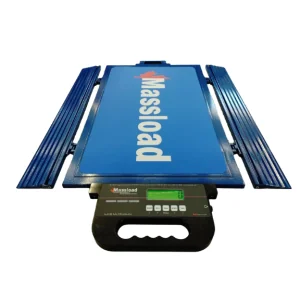
Portable axle scales are low-profile weighing platforms that measure the load on each wheel or axle of a vehicle. By placing a pad under each wheel and summing the readings, the operator can get an accurate axle weight, as well as a gross vehicle weight – all without having to use a fixed truck scale or install a pit.
The defining advantage is flexibility. A portable axle scale system can easily be set up in a field, on a loading dock, at a mine site entrance, or at an agricultural facility, and when the job is done, it packs up and moves with you.
Why Payload Monitoring Matters
The Hidden Cost of Running Over the Weight Limit
Overloading isn’t just a compliance issue. It’s a mechanical one.
Consistently putting weight on a vehicle beyond its rated axle weight can accelerate brake wear, stress the suspension, shorten tire life, and, if you let it go on long enough, can even start to cause frame fatigue. Fleet owners who just make a guess when it comes to how much weight their truck can handle often find themselves quietly absorbing those costs as they spread across maintenance cycles and repairs.
Portable axle scales break that pattern by giving operators a real figure right at the point of loading when there’s still time to do something about it.
The Regulatory Reality
In both Canada and the US, weight limits are set by federal and provincial/state regulations – and they vary depending on what highway you’re on, how many axles your truck has, and what type of vehicle it is. Enforcement at weigh stations and roadside stops is a regular occurrence in a lot of places. For operators in agriculture, mining, construction, and bulk transport – even a single overweight citation can have you on the radar even more from that point on.
Having a portable axle scale gives you documentation (printed ticket or database record) including a timestamp, axle weights, and gross weight – which serves as a record for you, and if needed, a compliance artifact.
Types of Portable Axle Scales
Not every application calls for the same scale. Here’s how the main categories differ:
Axle Pad Scales
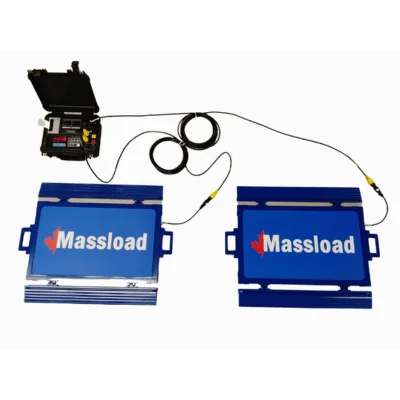
These are the workhorses of portable truck weighing. A set of pads (one per wheel position) connect to a central display. The operator drives the vehicle onto the pads, takes a reading and gets individual axle weights and a calculated gross vehicle weight.
Axle pad scales balance ruggedness with portability. They’re suited for fleet dispatch, loading dock verification, agricultural weighing, and any fixed-rotation use case where the scale moves between sites but isn’t constantly being set up and broken down.
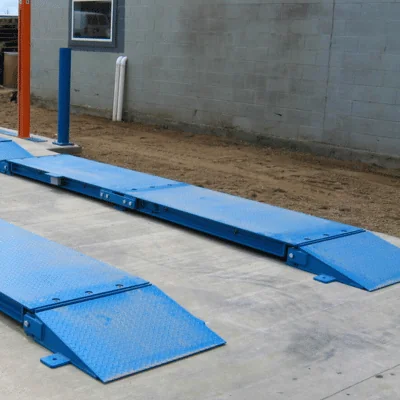
Ultraslim Wheel Load Scales
When you need to be able to drive over a ramp and you don’t have a lot of clearance – typically at loading docks, in facilities with limited space, or for low-profile commercial vehicles – Ultraslim scales offer a reduced platform height that makes driving onto the pads easier and safer.
Their low profile also makes them easier to transport and handle in tight spaces.
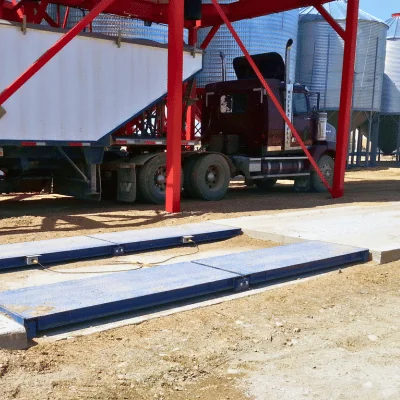
Farm Truck Scales
Working with livestock, produce, and heavy agricultural equipment can be a real challenge, with vehicles that can range from a light pickup truck to a fully loaded grain truck.
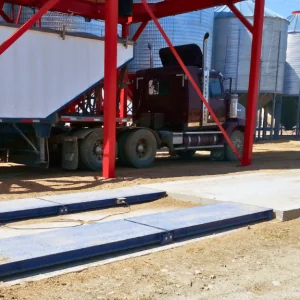
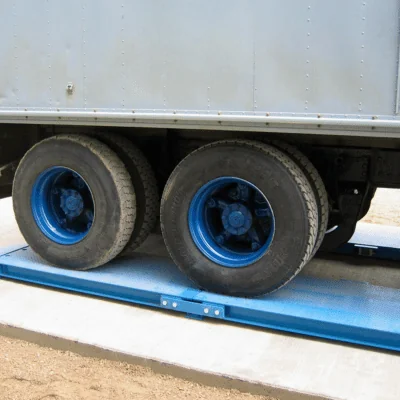
Farm truck scales are built to handle these conditions. They’re often specified with wide pad surfaces to accommodate dual rear wheels and higher capacity ratings to suit loaded grain transport.
This type of truck can be moved from one site to another using a forklift, making it portable.
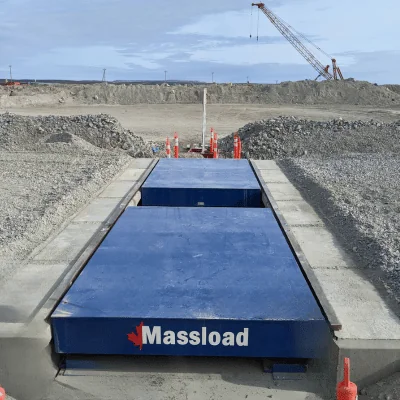
Mining Vehicle Scales
Off-road mining equipment operates in extreme conditions – high loads, dust, vibration, and extreme temperatures.
Mining vehicle scales are built to meet IP-rated enclosure standards and designed with capacities to match heavy haul trucks and articulated dump vehicles.
They’re not a general-purpose product – they’re purpose-engineered for sites where standard industrial scales just wouldn’t last very long.
Key Specifications to Evaluate
When comparing portable axle scale systems, these are the specifications that actually affect performance in the field:
Capacity Per Pad
Axle weight limits in North America generally – in most cases – run up to 20,000 lbs per axle in standard configurations. But heaps of trucks in tandem or tridem axle groups carry an awful lot more.
Just make sure your scale is capable of handling the heaviest axle load you’ll ever encounter. Buying a scale that can’t handle the job doesn’t just give you a wrong reading, it can also risk damaging the load cell.
Accuracy and Resolution
You need to be able to rely on the accuracy of your scale. Look for systems that are rated to be at least ±0.1% of full scale. The resolution (the smallest increment the display reports) also needs to be fine enough for your application.
Display and Indicator Options
A basic numeric indicator is sufficient for most payload monitoring work. For logging, ticketing, or integration with dispatch systems, look for indicators that offer:
- Printout capability (onboard or via external slip printer);
- Data logging to USB or SD card;
- RS-232 or USB output for integration with fleet management software;
- Multi-channel display for simultaneous per-axle and gross weight readout.
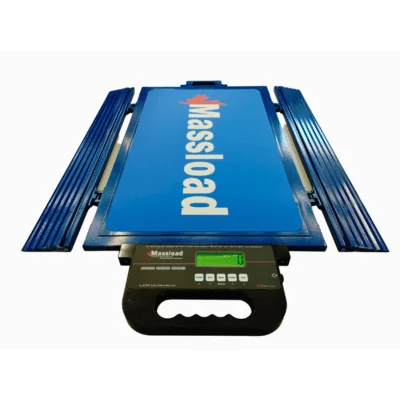
Massload’s M2000 portable data case is an example of a system that combines a battery-powered processor, display, and printer all in one neat package – so you don’t have to lug around a whole bunch of separate bits of kit.
Platform Profile and Ramp Design
The way the ramp is angled and the whole platform is set up will have a big impact on how smoothly vehicles drive onto the scale. Ramps that are too steep or platforms that are too high introduce side load to the scale, which affects the mechanical and electrical performance of the load cell in the scale.
Environmental Rating
If you’re setting up the scale outdoors or in an area that gets washed down – think farms or mines – you’ll want a scale that’s been built to withstand the elements. Look for load cells and housings that are sealed up and can withstand submersion. IP67 or IP68 ratings will give you an idea of how waterproof a system is.
Durability and Construction
Portable scales are going to get dropped, driven over, and stacked up – they’re tough units. Steel construction with a non-slip coating is the standard for quality units. Check out the cable entry points and connector quality too, these are common failure points on lower-cost systems after a season of field use.
Who Needs a Portable Axle Scales?
Agriculture
A portable axle scale set up at the farm gate or elevator will give operators a quick check on whether they can make the trip – before they hit the public roads.
In grain operations, the difference between a legal load and an overloaded one can be just a few hundred kilograms/pounds, and that can make all the difference in the world.
Construction and Civil Works
Aggregate haulers, concrete mixers, and material dump trucks are common overweight offenders — not from negligence, but because payload estimation on loose material is genuinely difficult.
Portable axle scales will give site managers the chance to check whether the trucks are loaded properly before they leave the site – saving against fines and damage to the road.
Mining
Mine haul trucks operate on private haul roads where public weight limits don’t apply, but equipment ratings still do.
Running consistently over payload specifications degrades tires, suspension, and payload structure. Portable scales at the load point provide an immediate feedback loop for loader operators.
Fleet Management and Logistics
If you’ve got a fleet of mixed cargo vehicles where drivers often don’t know in advance where they’re going, then a portable weigh station at the dispatch point is a no-brainer.
Catching overloads before they hit the road will save your drivers, save you money and avoid all the hassle of roadside corrections.
Traffic Enforcement
Law enforcement and highway authorities use portable axle scales for mobile enforcement. Systems like this have features like data logging and printing out tickets, things the average industrial scale might not have.
What to Ask Before You Buy
Before you go buying a portable axle scale system, work through these questions first:
What’s the heaviest axle load I’ll be weighing?
Make sure the scale can handle it – with some wiggle room.
Do I need printed records?
If you’re keeping records of vehicle weights or need to bill by weight, you’ll probably want something that can print out.
What’s the surface I’ll be weighing on?
If it’s uneven or soft, then you’re going to need to find a system that can handle it – or make sure the surface is made good first.
What environmental conditions will the scale be exposed to?
Think about whether its going to be stuck outside in the rain, swabbed down with a hose, or just sitting in a dusty corner – all of these things will impact what kind of IP rating and build quality you need.
How often is the scale going to be shifting around?
If it’s going to be in the back of a truck all the time, then you’ll want something that can withstand a few bounces around – a sturdy case and a compact design are important in this case. If on the other hand its just going to be sitting in one place then you probably don’t need to worry about that so much.
Do you need Legal-for-Trade Certified Scale?
If you’re going to be using the weighing results to charge people, or to enforce some kind of rule – then you’ve got to have something that’s officially certified. Loads of industrial scales used purely for keeping track of how much stuff has been moved around don’t need certification – but its always best to check in with your local authority to be sure.
What to Look for in a Portable Axle Scale
- Capacity with margin to your heaviest axle loads;
- Accuracy of ±0.1% full scale or better for compliance-grade results;
- Environmental rating (IP67 minimum for outdoor use);
- Indicator and output that match your documentation requirements;
- Durable construction with quality connectors and cable protection.
Portable axle scales are one of the best investments you can make in a fleet operation. A fine for an overweight vehicle, the cost of a premature suspension repair or the risk of a road damage claim can all add up to more than the cost of a good system.
But the right system will pay for itself pretty quickly. And it will keep on saving you money by keeping your vehicles legal, your drivers safe and your operations running smoothly.
Why Choose Massload for Portable Axle Scales
Massload Technologies has been making load cells and weighing systems in Canada for 40 + years now. And we’re proud to say that were the only load cell manufacturer in Canada that’s VCAP certified.
That means we build our axle pad scales and portable truck scales using our own in-house made load cells, which means that we are confident that the bit that really does the job is built to the same high standard as the rest of the system.
Our range of portable axle scales is pretty comprehensive: we do axle pad systems, Ultraslim wheel load scales, truck scales for farms and scales for mining vehicles. And every single one of them is designed with a specific use in mind rather than being some kind of generic off the shelf product.
We support our customers across Canada, the US and other countries round the globe with calibration support, technical help if anything go wrong and custom engineering for the jobs that don’t fit any standard pattern.
If you’re thinking of buying a portable axle scale and want to go over the details of your job with our team, get in touch today!