A load sensor on a crane answers one question: how much is on the hook right now?
That’s an important thing to know, but it’s just the starting point. A number on a dial protects nothing by itself. What makes a measurement into overload protection, operator awareness and useful records is the instrumentation layer.
What Is a Crane Overload Protection Device?
A crane overload protection device is just a system that keeps an eye on how much weight is on a crane – and does something when that weight gets too high. First, it warns the operator; then, if the weight keeps going up, it stops the lift altogether.
Regulations in most places require you to have some sort of overload protection on cranes that weigh a certain amount, which is why the question on a modernization project is rarely whether to add it, but which type.
Not all overload protection measures the same thing:
- Mechanical overload limiters use spring or lever mechanisms that trip a switch under excessive force. They’re simple, but not very precise and they can change over time.
- Electric overload devices infer the load from hoist motor current. Inexpensive, but they only measure the motor, not the weight, so they can be easily inaccurate.
- Slip clutches on chain hoists don’t allow the crane to lift anything heavier than a certain weight. They’re protection, but not really measurement.
- Load-cell-based systems measure the actual force in the load path They give you a precise reading of the weight that’s on the hook.
The first three will stop an overload, but only the last one will give you the information you need to understand what’s going on.
That distinction matters because a load-cell-based system doesn’t just stop an overload, it produces the live readings, set points, PLC signals, and logged data that the rest of this article is about.
Set Points and Relays: Where Protection Becomes Automatic
The single biggest difference between old crane monitoring and new is what happens when you hit a certain threshold.
Legacy systems rely on an operator noticing that a reading is too high — while also managing the lift, the rigging crew, and everything else on the floor.
A modern system takes that job away from human attention. A set point is a load threshold you can configure into the system; a relay is what trips when the load crosses that threshold. Working together, they can:
- Trigger a warning: light up an alarm or a warning light at the first threshold, giving the operator a chance to react and prevent an overload.
- Cut the hoist: at a second threshold, the relay can stop the lift dead, preventing an overload in the first place.
- Log the event: every threshold crossing is recorded, whether or not anyone was watching.
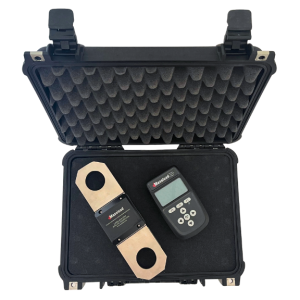
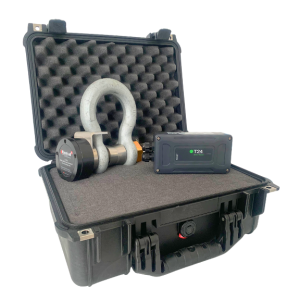
Transmitters like the TLM8 load cell weight transmitter can do all that logic at the signal level, converting the load cell output into set points and outputs that your control system can work with.
Wireless: Solving the Oldest Problem in Crane Instrumentation
Anyone who has maintained an instrumented crane knows the real enemy isn’t the sensor, it’s the cables. Festoon systems and slip rings running up a moving crane are a permanent maintenance liability: they wear, they snag, and they fail at the worst possible time.
Wireless transmission removes that entire failure mode. A wireless 4-20mA output takes the load signal from the sensor and delivers it to an existing PLC as a standard analogue input — no new cable runs, nothing dragging along the runway.
To the PLC, it looks exactly like a wired sensor. To the maintenance team, it looks like one less thing that breaks.
For systems with multiple sensors like a main hook and an auxiliary, or several lift points, wireless load cell components can bring every channel into a single receiver or handheld indicator.
Remote Displays: One Number Everyone Can See
Overload protection is most effective when it’s not a secret between the sensor and the PLC. Bright remote displays like the Aurora make the live load visible to the operator and the whole crew at the same time. And the Aurora 45SL adds a simple green/red threshold indication, so anyone on the floor can instantly read the crane’s status without having to understand the numbers.
That shared visibility is also a safety feature in its own right. When the rigger, operator and supervisor can all see what the weight is at a glance, you’re a lot less likely to have load-related misunderstandings.
Data Logging: The Records Your Next Inspection Will Ask For
The last piece of the instrumentation layer is memory.
Load cell data logging software captures the load history that maintenance planning, inspection records and process documentation need – automatically, in the background, for every single lift.
That history turns out to be worth more than most facilities expect.
Frequently Asked Questions
Can crane load data feed an existing PLC?
Yeah, you can. With a wired or wireless 4-20mA output, you’re basically sending the load signal as a standard analogue input. Which means existing PLCs can just use it for alarms, interlocks or whatever process logic you need without having to go out and buy new programming hardware.
How does instrumentation fit into a larger crane modernization?
Load monitoring instrumentation is basically the first step in a system getting a modernization, it’s the part that does the measuring.
But it can also come together with drives, controls & safety systems as part of a full-on modernization project that gets installed by a crane service provider. They can also install it standalone if that’s what you need.
Design the Signal Chain Properly The First Time
The trick is figuring out what your system really needs to do: warn, cut out, display, transmit, record, or all five.
Our technical application team can help you design the complete chain, from sensor to set point to PLC, as one calibrated system.
Explore our material handling and crane modernization applications or contact us to start specking yours.
RELATED PRODUCTS